Photograph restoration · Nigeria
There is one
copy left.
01 · developing — as it survives
Northern Nigeria · 1961 · Harrison Forman, public domain
Developed, then repaired, in your browser: the damage above is synthesised onto this plate so you can watch it come off. It is a demonstration, not a restoration we are claiming credit for.
The negatives did not survive. Humidity, dust and heat take a print in about twenty years, so the photograph of your mother at her 1978 wedding is now a single faded, cracked, water-marked sheet in an album in a wardrobe.
Photograph it with your phone. The bench squares it, clears the fog and enlarges it for framing — and where a loss cannot be filled from what survives around it, it stops, rather than inventing a face that was never there.
First 3 photographs free · then ₦5,000 each · tear repair and colouring await a model provider
A household archive is one flood, one move, or one bad dry season from ending.
Nigerian studios shot on negative film for decades, and almost none of those negatives were kept. What is left is the print the family was given: one object, handled, folded into a Bible, taped to a wall, carried through a move, stored in a plastic sleeve that trapped the moisture against it.
A restoration is not a nice-to-have for that object. It is the only remaining copy operation.
Which is exactly why the restoration has to be conservative. A tool that returns a beautiful photograph of a person who is almost your grandfather has not saved anything. It has overwritten the last copy with a guess.
The line we will not cross
When the detail is gone, we leave it soft.
Every setting on this bench is biased toward the source. Move the switch and watch what happens to one eye when that bias is removed.
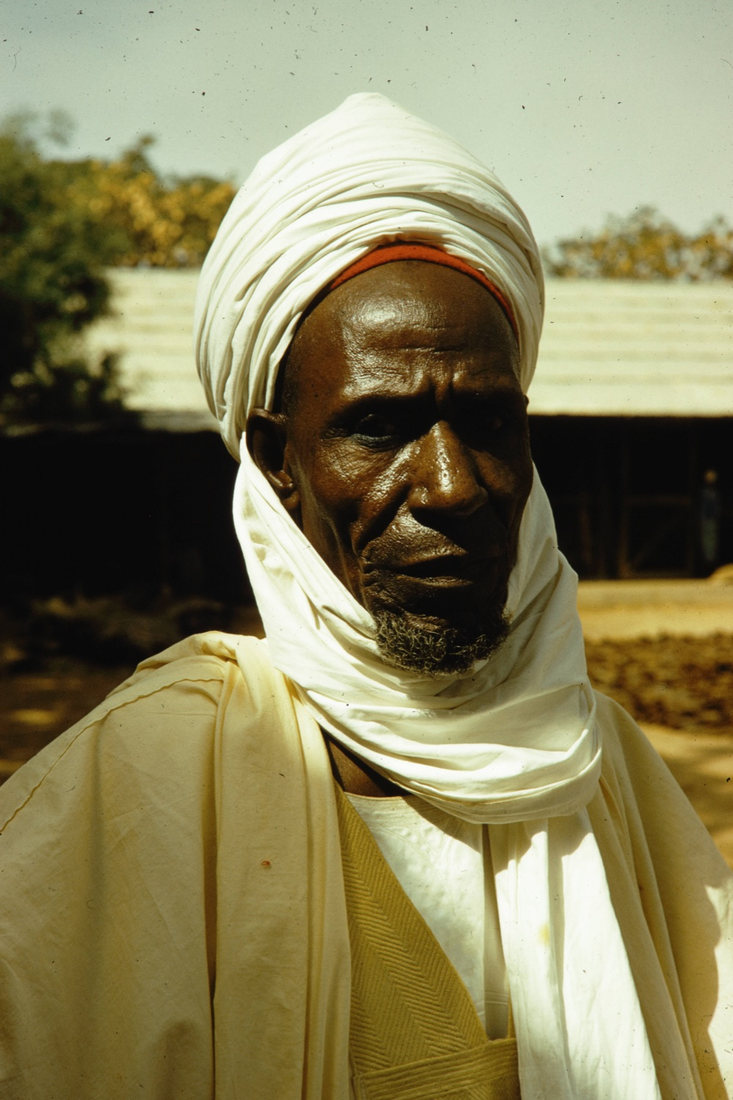 As it survives
The print as the phone photographed it: fogged, foxed, a crease down the temple and the emulsion lifting beside the eye.
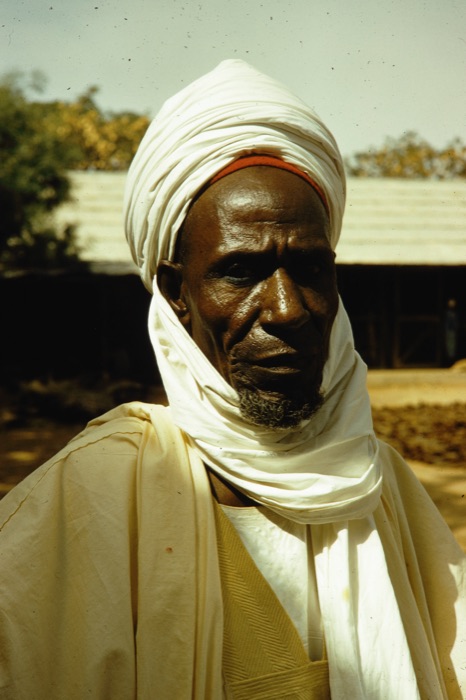
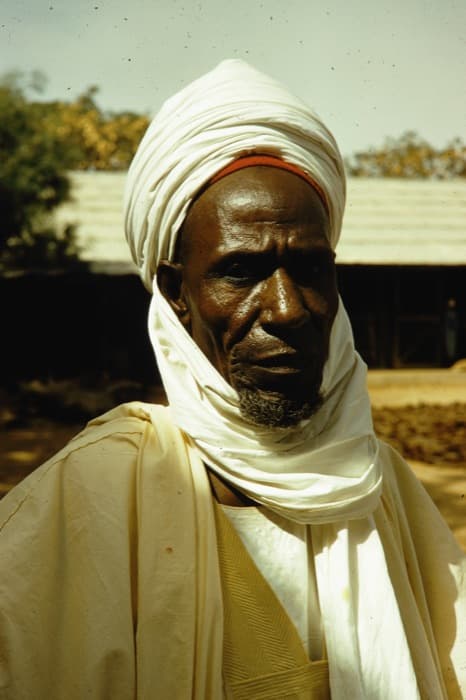
All three panels are one photograph. The first is the plate with twenty years of damage put back onto it in your browser; the other two are the same negative with that damage gone — which is what a repair is aiming at. The third is not a rival’s output and not a mock-up: it is this file with the reconstruction limit removed, the setting most restoration tools ship on by default because it demos well.
Plate: A man in a white turban, photographed outside a market shed. Northern Nigeria, 1961. Harrison Forman, public domain. Damage synthesised in your browser so both states are provably the same negative.
The bench · five operations
Everything that happens to your photograph, in order.
Each part is listed with what it does and what it is forbidden to do. Open a row to read both.
What comes in
Studio prints, postcards, ceremony frames.
Photographs made in Nigerian studios and at Nigerian ceremonies between the 1930s and the 1990s, on paper that was never meant to last this long. Most arrive as a phone photo of a page, taken at an angle, with the flash bouncing off the plastic sleeve. That is the normal case here, not the difficult one.
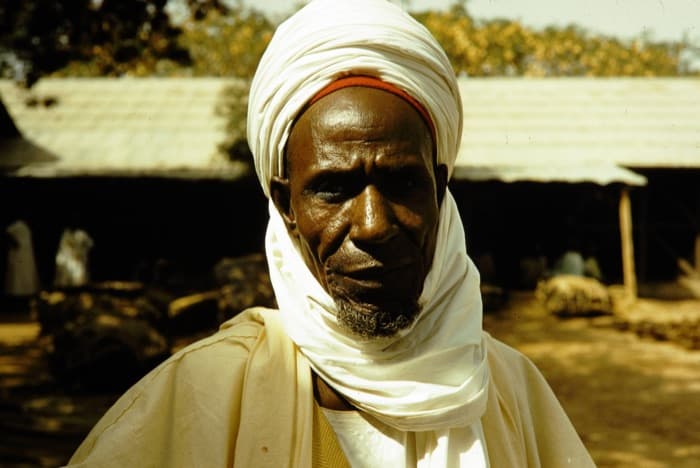
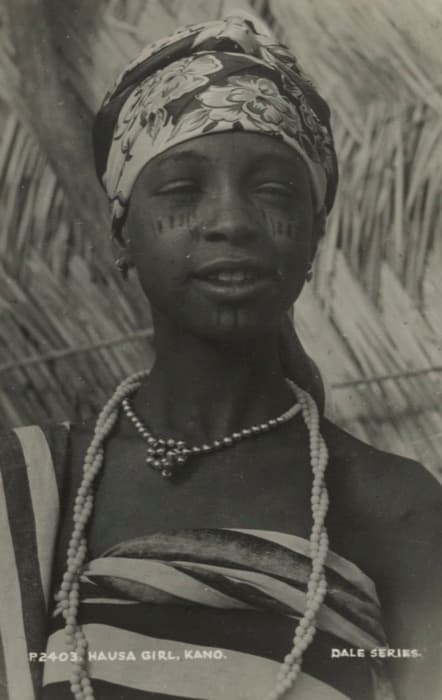
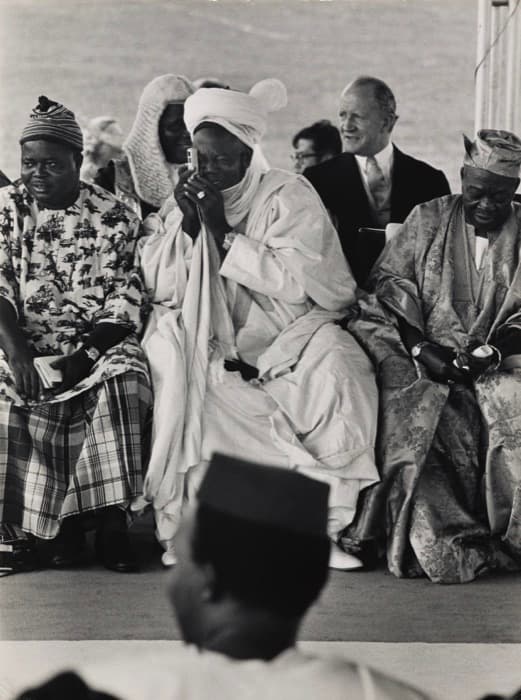
Archive prints, public domain, shown as the kind of photograph this bench is for. They are not customer work — Sephia Room has no customer results to show yet, and will not invent any. Frames from Harrison Forman, 1961; Harrison Forman, 1961; E. A. Sweetman & Son Ltd, 1959; Moneta Sleet Jr., 1960.
Counter card
Three free, then pay for the ones that matter.
First three
Free
three photographs
Bring three prints and see what comes back before any money is discussed. Full resolution, watermark-free, yours.
- Squaring, spotting, clearing and enlargement
- Full-resolution file, no watermark
- Before / after card you can send to family
Per photograph
₦5,000
each, after the first three
One print, worked through the whole bench. Pay for the ones that matter and no more.
- Everything in the first three
- Optional hand-tinting, reversible
- The monochrome file kept alongside the tinted one
Five at once
₦20,000
for five photographs
The usual shape of this job: an album comes out of the wardrobe and there are five worth saving, not one.
- Five photographs, any mix of repair and tinting
- Delivered as one archive you can pass around
- No expiry — send them as you find them
Framed and delivered
₦60,000
one framed print, delivered
The restored photograph printed on archival paper, framed, and brought to the house. This is the thing people actually want on the wall.
- One restoration, worked to print standard
- Archival print, framed, glazed
- Delivered within Nigeria
Card and transfer payment is not connected yet. Every button above takes you to the bench and records what you want; nothing charges you, and we will not pretend otherwise to look further along than we are.
The thing people actually want
A JPEG goes in a folder. A frame goes on the wall.
The restored file is the product. The framed print is the point. Nobody has ever cried at a download, and every parlour in this country already has a wall arranged for exactly this.
We intend to have the print made at a lab, framed, and delivered to the house for ₦60,000.
We are saying intend on purpose: no print shop has signed with us yet, so there is nothing to order today. Tell us you want one and you will be the reason we sign one.
Across the counter
What people ask before they hand it over.
Mostly the same eight questions, in the same order, and the answers do not change depending on who is asking.
Do I need a scanner?
No. A phone photograph is the expected input. Lay the print flat, stand over it, turn the flash off, and photograph it. Slightly crooked is fine — you mark the four corners of the print on the next screen and the bench straightens the perspective for you.
Do you keep my photograph?
No. Your photograph is processed in the server's memory and sent straight back to your browser. It is never written to a disk of ours, we keep no copy, and we never use it to train anything. Download the result before you close the tab, because we will not have it afterwards.
What happens where the photograph is badly damaged?
The bench fills a tear or crease from the surviving emulsion immediately around it. Where a loss crosses a face and there is nothing left to copy from, it leaves that area soft and marks it rather than inventing detail. A slightly blurred patch is the correct answer; a sharp stranger is not.
Will it invent a different face?
It is built specifically not to. Every setting is biased toward the source, and fidelity to the original defaults high. If the model invented a subtly different face it would have destroyed the thing that made the photograph worth saving, so unrecoverable detail stays unrecovered.
How much does it cost?
The first 3 photographs are free. After that it is ₦5,000 per photograph or ₦20,000 for five. A framed archival print delivered within Nigeria is intended at ₦60,000. Payment processing is not connected yet, so nothing on the site can charge you today.
Can you colour a black-and-white photograph?
Colouring is a stage of the bench, laid on the way a studio tinter laid transparent dye over a gelatin print, and the monochrome file is always kept alongside it. It needs a restoration model, and none is connected to this deployment yet — the interface tells you so before you start rather than after.
What file formats can I upload?
JPEG, PNG and WEBP, up to 25MB. HEIC — the format an iPhone saves by default — cannot be opened by web browsers, so set Settings → Camera → Formats → Most Compatible, or share the photo to yourself, which converts it to JPEG on the way.
Is my grandfather's photograph safe to upload?
The physical print never leaves your hand, and the digital copy is not retained. Keep the print regardless — it is the record, and a digital file is not a reason to throw it away.
Bring the print.
Take it out of the album, put it flat on a table, stand over it, and photograph it. That is the whole preparation. The bench does the rest in front of you, and shows you what it could not do.